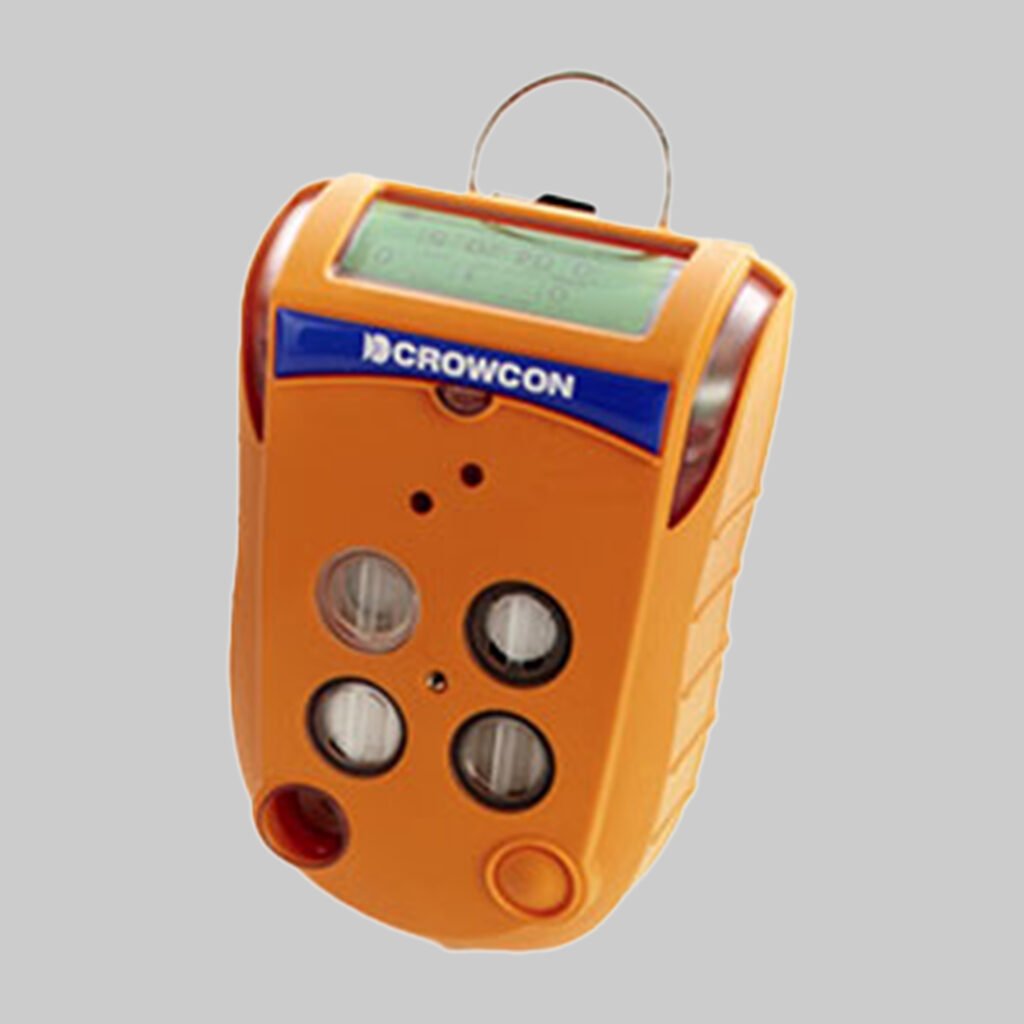
We supply, calibrate and service confined space gas detectors for maintenance teams, contractors and utilities across Ireland. Our range includes 4 gas monitors from Crowcon, Honeywell BW and WatchGas, with the test gas and calibration support to keep them ready for every entry.
Tanks, pits, sewers, chambers, vessels and cellars can all be confined spaces. The air inside can be short of oxygen, rich in oxygen, flammable or toxic, and it can change while people are working. A confined space gas detector is the only way to know what is in the air before and during entry.
Most entries are covered by a 4 gas monitor. It measures:
The Safety, Health and Welfare at Work (Confined Spaces) Regulations 2001 apply to work in confined spaces. As the HSA summarises them, work in a confined space should be avoided where reasonably practicable, a risk assessment must be done before work starts, entry needs a safe system of work, and suitable emergency arrangements must be in place first.
The HSA Code of Practice for Working in Confined Spaces gives practical guidance on testing. It says testing of the oxygen content should normally be done first, because other gas monitoring equipment may only be accurate in a normal oxygen environment. It describes measuring flammable atmospheres as a percentage of LEL, and testing for common contaminants such as carbon monoxide, carbon dioxide and hydrogen sulphide with suitable portable apparatus. It also says the equipment should be calibrated, examined and maintained in line with the manufacturer’s instructions, with records kept. Our guides explain what LEL means and what H2S gas is.
A personal gas detector is worn on the body and alarms when the gas around the wearer reaches a set level. Single gas models, such as an H2S monitor or a CO monitor, suit sites where one gas is the known hazard. A multi gas detector measures several gases at once and is the usual choice for confined space entry, where the hazards are not always known in advance.
We supply Crowcon gas detectors including the Gas-Pro, T4 and T4x, Honeywell gas detectors including the GasAlertMicroClip XL and GasAlertQuattro, and WatchGas monitors. See the full portable gas detector range.
The HSA Code of Practice says initial testing should be done from outside the space where practicable, and that the atmosphere should be tested on a representative basis, allowing for whether a gas is heavier or lighter than air. That means testing at the top, middle and bottom of a manhole or tank before anyone goes in.
A pumped monitor, or a monitor fitted with a pump adaptor and sampling hose, draws air up from those levels so the reading is taken without anyone entering. Allow enough time for the sample to travel the length of the hose before reading.
A bump test is a quick check that the sensors respond and the alarms work. It uses a short burst of test gas and is usually done by the user before the monitor goes into service. Calibration goes further and corrects the readings against certified gas at zero and span.
Sensors drift and can be damaged by knocks, damp or high gas exposure, so both checks matter. We provide gas detector calibration with a certificate for each monitor.
The 4 gas monitor, measuring oxygen, flammable gas as % LEL, carbon monoxide and hydrogen sulphide. It covers the hazards found in most tanks, chambers and sewers. Some sites need extra sensors for specific gases.
The HSA’s 2026 Code of Practice for the Chemical Agents Regulations sets an occupational exposure limit value for hydrogen sulphide of 5 ppm over 8 hours and 10 ppm over 15 minutes. Your monitor’s alarm levels should be set with these in mind.
Follow the manufacturer’s instructions and your own risk assessment. Many users bump test before each day’s use. If a monitor fails a bump test, take it out of service until it has been calibrated or repaired.
Yes. Our engineers calibrate and service gas detection equipment from many manufacturers. Tell us the make and model when you book.
Leave the space at once and follow your emergency arrangements. Anyone feeling unwell should get to fresh air, and call the emergency services.
Tell us what spaces your team enters and how many monitors you need, and we will recommend the right detectors and test gas. Call 01 289 7720 or email info@vistec.ie.
© 2026 Vistec Gas Detection Ltd
Descriptions