We provide gas detector calibration and servicing for fixed systems and portable monitors at sites across Ireland. Every calibration uses certified test gases, and you get a calibration certificate for your records. We have been doing this work since 1983, and we service equipment from many manufacturers, not only the brands we sell.
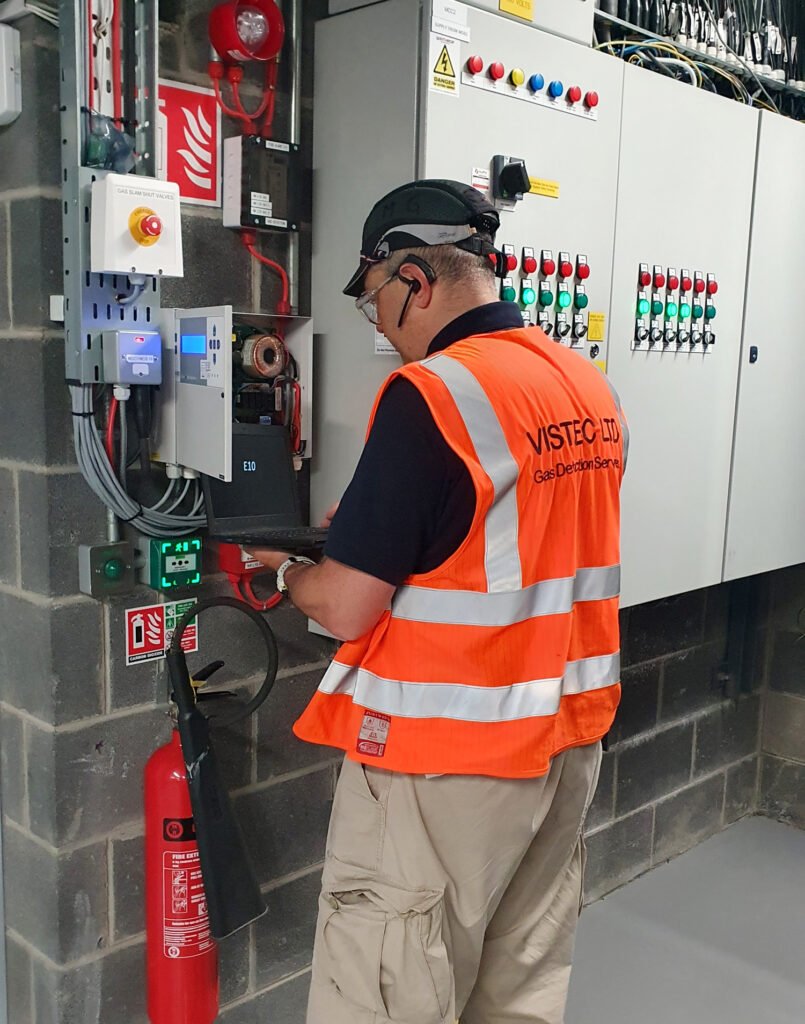
A gas detector does not measure gas directly. Its sensor produces a signal, and the detector converts that signal into a reading. Calibration is the process of checking that reading against a known gas concentration and adjusting the detector so the two match.
There are two steps. The zero check exposes the sensor to clean air, or a zero gas, so the detector reads zero when no target gas is present. The span check exposes the sensor to a certified test gas of known concentration, and the engineer adjusts the detector so it reads that value. A detector that is correct at zero and correct at span can be trusted across its working range.
We carry certified test gases matched to the sensors on your site, so the reference point for every adjustment is traceable.
A gas detector bump test is a quick functional check. A small amount of test gas is applied to the sensor to confirm it responds and that the alarms go off. It answers one question: does this detector react to gas today? It does not adjust the reading.
A full calibration goes further. It measures how far the reading has moved from the true value and corrects it at zero and span. Bump tests are typically done by the user, often before a portable monitor is taken into use. Full calibration is done by a trained engineer at set intervals, with the results recorded on a calibration certificate.
Both have a place. A bump test tells you the detector is alive. Gas monitor calibration tells you its numbers are right.
Every gas sensor changes over time. Electrochemical cells used for toxic gases and oxygen slowly use up their chemistry. Catalytic sensors for flammable gases can lose sensitivity when exposed to certain vapours, silicones or high gas levels. Dust, damp, temperature swings and physical knocks also take their toll.
The problem is that drift is silent. A detector can look healthy, power up normally and still read low. Regular calibration finds that drift and corrects it before it matters, and it shows when a sensor has reached the end of its life and needs replacing. How often you need it depends on the equipment, the gas and the environment, which we cover in our guide on how often to calibrate gas detectors.
Our engineer arrives with the test gases and tools for your equipment. A typical gas detector servicing visit covers:
After each visit you receive a calibration certificate. It records what was tested, the readings found, the adjustments made and the test gas used. Keep it with your site safety records. It is the document an insurer, auditor or health and safety inspector will ask to see.
If you have a maintenance contract with us, our database flags your service a month before it is due, so the next calibration is booked at a time that suits you rather than being missed.
We calibrate both fixed and portable detectors. Fixed gas detectors are calibrated in place on your site, including single detectors, multipoint panels and sampling systems. Portable gas detectors, such as Crowcon, Honeywell BW and WatchGas monitors, are calibrated and issued with a certificate.
Many sites have equipment from more than one supplier, often installed at different times. Our engineers service and calibrate gas detection equipment from many manufacturers, so you can have one company look after the whole site.
It depends on the detector, the sensor type, the gas and the conditions on site. Manufacturers set recommended intervals in their manuals, and harsh environments may need more frequent checks. We can advise on a sensible schedule for your equipment.
Yes. Bump testing is designed to be done by the user, following the manufacturer’s instructions and using a suitable test gas. It confirms the detector responds and alarms. It does not replace a full calibration by a trained engineer.
Yes. Our engineers calibrate and service gas detection equipment from many manufacturers. Tell us the make and model when you get in touch so we bring the right test gases.
You get a calibration certificate for each visit, recording the readings found, adjustments made and the test gas used. Any faults or sensors that need replacing are noted so you can plan ahead.
Yes. We are based in Blackrock, Co. Dublin, and we cover sites nationwide across Ireland.
Tell us what equipment you have and where it is, and we will arrange a visit at a time that suits you. Call 01 289 7720 or email info@vistec.ie.
© 2026 Vistec Gas Detection Ltd
Descriptions