Guide by Vistec Gas Detection. Last updated October 2026.
ATEX zones decide what kind of equipment, including gas detectors, can be used where a flammable atmosphere might form. This guide explains how the zones are defined in Irish law, which equipment category each zone needs, and what to look for when choosing detectors for a hazardous area.
ATEX comes from two EU directives. Directive 1999/92/EC covers the safety of workers where explosive atmospheres may occur, and Directive 2014/34/EU covers the equipment and protective systems used in those atmospheres. In Ireland, the workplace directive is given effect by Part 8 and Schedule 10 of the Safety, Health and Welfare at Work (General Application) Regulations 2007.
Under those Regulations, an employer where an explosive atmosphere may arise must assess the explosion risk, prepare an explosion protection document, classify hazardous places into zones and put a warning sign at each entry point to a hazardous place. Zones are based on how often, and for how long, an explosive atmosphere is likely to be present.
The Regulations also set an order of priority. First, prevent an explosive atmosphere forming. Where the activity does not allow that, avoid igniting it. Then limit the effects of any explosion. The explosion protection document must show that the workplace and work equipment, including warning devices, are designed, operated and maintained with due regard for safety. Gas detection is one of those warning devices: it tells you when a release is happening so that ventilation, isolation or evacuation can follow.
Schedule 10 of the 2007 Regulations defines three zones for flammable gases, vapours and mists mixed with air. In plain terms:
Equipment made for explosive atmospheres is sorted into categories under Directive 2014/34/EU, which has applied since 20 April 2016 and replaced the earlier Directive 94/9/EC. For surface industries (equipment group II), category 1 gives a very high level of protection, category 2 a high level and category 3 a normal level.
The 2007 Regulations set out which categories are to be used in each zone:
A gas detector that goes into a hazardous area must itself be safe in that atmosphere. An ATEX-certified detector carries the CE mark and the Ex mark, plus a code showing its group, category and type of atmosphere. For example, II 2 G means equipment group II, category 2, for gas. The marking also shows the type of protection used, such as a flameproof enclosure or intrinsic safety, and a temperature class.
Certification for use in the zone is separate from how well the detector measures gas. Honeywell’s technical guide notes that flammable gas detectors are also expected to meet a recognised performance standard in the EN 60079-29 series. The ATEX equipment directive can also cover control equipment outside the hazardous area when it is needed for equipment inside it to work safely, so the whole system needs to be specified together.
Catalytic flammable sensors work by burning a small amount of gas, so in a hazardous area they sit in a strong metal housing behind a flame arrestor. They work well but can be poisoned by substances such as silicones and sulphur compounds.
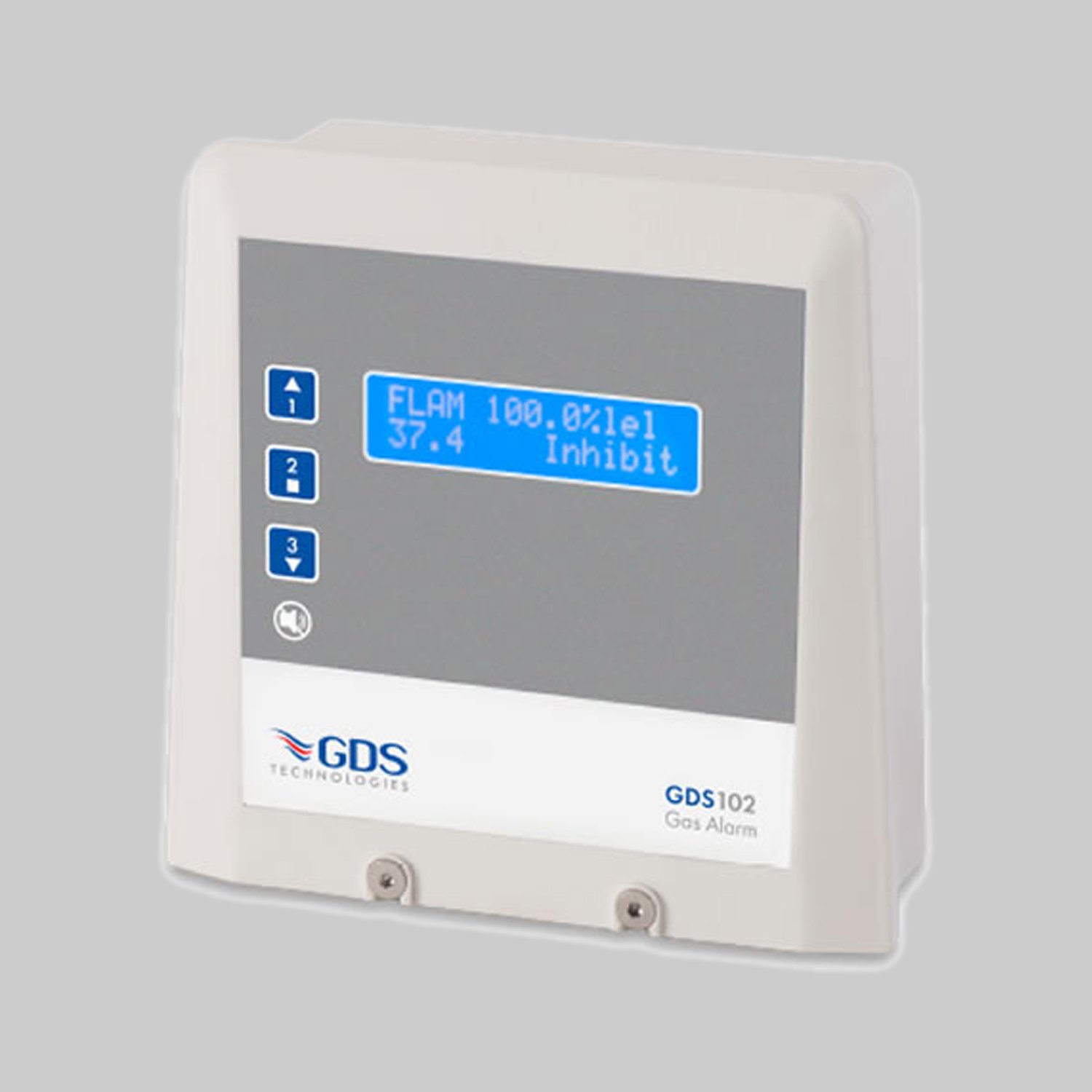
Infrared detectors measure how much infrared light the gas absorbs. Honeywell’s guide lists their advantages as a very fast response, low maintenance, resistance to poisoning and the ability to work in inert atmospheres. Infrared cannot detect hydrogen, so hydrogen risks need another sensor type. The GDS FR1 and GDS FR1R are XDI infrared detectors designed for hazardous areas. Our fixed gas detectors page covers the wider range for safe and hazardous areas. If you are new to flammable gas readings, start with our guide to what LEL means.
The employer, as part of the explosion risk assessment and explosion protection document. Before a workplace with hazardous places is first used, the 2007 Regulations require its overall explosion safety to be verified by a competent person.
II means equipment group II, for places other than mines. 2 is the equipment category, suitable for Zone 1 and Zone 2. G means the equipment is for gas, vapour or mist atmospheres rather than dust.
No. The 2007 Regulations call for category 1 or 2 equipment in Zone 1. Category 3 equipment is designed for places where an explosive atmosphere is unlikely and short-lived, which matches Zone 2.
If a portable detector is carried into a hazardous area, it is equipment used in that zone, so it needs a suitable category for the zone. Check the marking on the instrument against the zones it will enter.
No. Zoning comes from the risk assessment and is based on how often and how long an explosive atmosphere may be present. Detection is a warning and control measure within that framework. It does not replace the classification, the explosion protection document or the correct equipment categories.
Yes. The 2007 Regulations require a warning sign at or near each point of entry to a place classified as hazardous, in the format set out in Schedule 10.
Tell us your zones and gases and we will recommend, install and commission suitable certified detection. Call 01 289 7720 or email info@vistec.ie.
© 2026 Vistec Gas Detection Ltd
Descriptions