Guide by Vistec Gas Detection. Last updated October 2026.
I.S. 820 is the Irish standard for gas installations in non-domestic buildings such as hotels, restaurants, schools and hospitals. This guide gives facilities and operations managers a plain overview of the standard, the registration rules for non-domestic gas works that took effect in 2026, and where gas detection and interlocks fit. It is general guidance, not a substitute for advice from a Registered Gas Installer.
I.S. 820 is published by the National Standards Authority of Ireland (NSAI). The current edition, I.S. 820:2019 (Edition 3), specifies requirements for the design, operation, maintenance and testing of natural gas and LPG installations in non-domestic premises, up to the point where gas is delivered to the appliances. It is aimed at commercial gas installers.
I.S. 820:2019 is an approved code of practice under the Safety, Health and Welfare at Work Act 2005, replacing the 2010 edition. The full text is sold by NSAI, so the detailed requirements should be read from the standard itself or confirmed with your installer.
According to NSAI and the Department of Enterprise, the main changes in I.S. 820:2019 are additional and revised requirements for:
Following a CRU decision paper published in December 2025, the Electricity Regulation Act 1999 (Gas Works) Regulations 2026 (S.I. No. 106 of 2026) came into operation on 1 September 2026. They extend the definition of regulated gas works to installations covered by I.S. 820, as well as the domestic standard I.S. 813, in domestic and commercial premises. The RGI Scheme states that from that date, regulated non-domestic gas works must be carried out by a Registered Gas Installer (RGI).
The RGI Scheme lists hotels and guest houses, hospitals and nursing homes, restaurants, schools and colleges, gyms, offices, retail units and public buildings among the premises that may be affected. There are exclusions. The Regulations exclude gas works in industrial premises, work covered by I.S. EN 15001, the design of gas works, and work at or upstream of the point of delivery, among others.
The point of delivery is where the regulated installation starts. For natural gas, S.I. No. 106 of 2026 defines it as the point immediately downstream of the control device fitted to end the service pipe. For LPG, other than LPG distribution systems, it is the outlet of the storage vessel isolation valve. Everything from there to the appliances is the territory of I.S. 820 in a non-domestic building.
If you arrange gas work in a commercial building, the RGI Scheme advises you to:
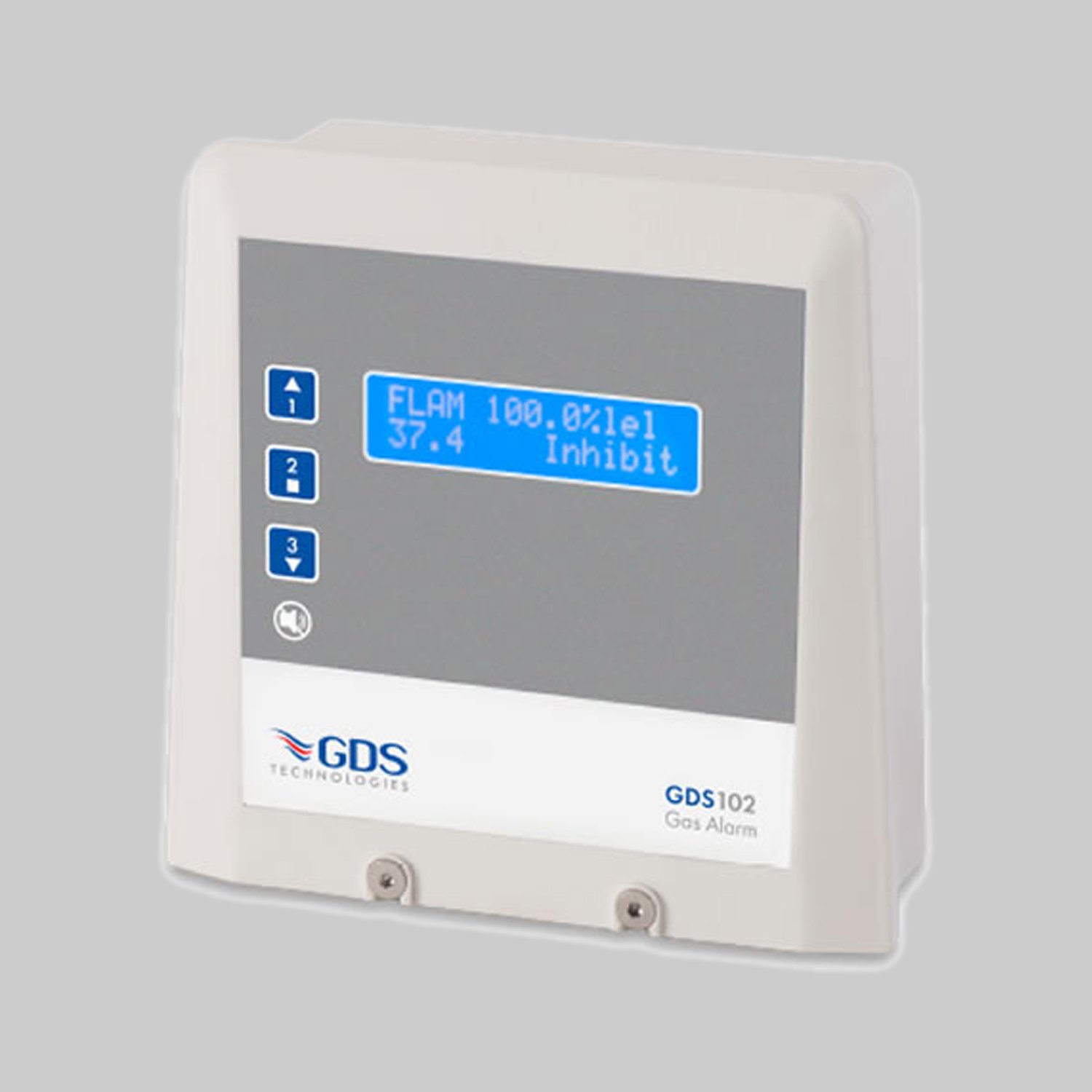
Commercial kitchens, boiler rooms and plant rooms can use several linked safety measures. Gas detection senses a leak and raises an alarm. An automatic shut-off valve closes the gas supply when the detector or another safety input calls for it. A gas interlock system can also stop gas flowing to appliances if, for example, the extraction or ventilation is not running. Emergency isolation lets staff cut the gas quickly in an emergency.
In practice this is usually a small control panel linked to one or more sensors and a solenoid valve on the incoming gas line. Products such as the Madas automatic gas valves, built to EN 161, close the supply on a signal from the panel. A boiler house panel such as the Medem AGDS range can monitor several sensors and control the valve directly. At handover we train your staff on how the system works and how to reset it after an alarm.
Whether each of these is required on your site, and how it must be installed, depends on I.S. 820, the appliance manufacturers’ instructions and your risk assessment. Your gas installation designer and RGI should confirm this. Where fitting a shut-off valve involves work on the gas pipework, that part of the job may be regulated gas works and must be done by an appropriately registered installer. For plant rooms, see our page on boiler room gas detection.
I.S. 820:2019 is an approved code of practice under the Safety, Health and Welfare at Work Act 2005, and S.I. No. 106 of 2026 uses it to define which non-domestic gas works are regulated. For a view on your own legal obligations, speak to a Registered Gas Installer or your safety adviser.
S.I. No. 106 of 2026 came into operation on 1 September 2026. From that date, the RGI Scheme states that regulated non-domestic gas works must be carried out by a Registered Gas Installer.
Gas works in industrial premises are excluded from the regulated gas works defined in S.I. No. 106 of 2026. Check the scope and exclusions on rgi.ie, or ask the RGI Scheme directly, if you are unsure how your premises are classed.
It is where the regulated gas installation begins. For natural gas, S.I. No. 106 of 2026 defines it as the point immediately downstream of the control device that ends the service pipe. Work at or upstream of that point is excluded from regulated gas works.
Use the Find an RGI search on the RGI Scheme website, rgi.ie. Existing RGIs must notify the scheme before taking on non-domestic work, so ask your installer to confirm they hold the non-domestic category.
Yes. We supply, install and commission gas detection and interlock control systems, and train your staff on how they work and how to reset after an alarm. Where the job involves work on gas pipework, we work alongside your Registered Gas Installer.
We can survey your kitchen, boiler room or plant room and recommend detection and shut-off controls to discuss with your RGI. Call 01 289 7720 or email info@vistec.ie.
© 2026 Vistec Gas Detection Ltd
Descriptions