Guide by Vistec Gas Detection. Last updated October 2026.
H2S gas, or hydrogen sulphide, is one of the most dangerous gases found in sewers, wastewater plants, slurry stores and biogas sites. This guide explains where it collects, why your sense of smell cannot be trusted to find it, the Irish exposure limits, and how fixed and personal H2S monitors protect people.
Hydrogen sulphide (H2S) is a colourless gas given off when organic matter breaks down. At low levels it has the well known smell of rotten eggs. It is highly toxic, and it is also flammable, with a lower explosive limit of about 4% by volume. In practice the toxic hazard comes first: the Irish exposure limits are set at a few parts per million, thousands of times below the level at which it can burn.
H2S is heavier than air, with a relative density of about 1.19. The UK Health and Safety Executive notes that it collects in poorly ventilated areas, including sheltered spots outdoors, and in enclosed spaces such as tanks and pits. The HSE also notes that it is corrosive to metal, which matters for plant and pipework on biogas and slurry sites.
The HSA’s Code of Practice for Working in Confined Spaces names hydrogen sulphide from decaying organic matter as a hazard to assess before anyone enters a confined space. It also warns that toxic gas can travel through connected spaces such as sewer systems. Typical places to expect it include:
Many people assume they will smell hydrogen sulphide before it can hurt them. That is not safe. The HSE states that at high concentrations you cannot smell it, and that a fatal exposure can happen very quickly and without warning. NIOSH adds that the sense of smell tires quickly, so it cannot be relied on to detect H2S that is present continuously. This loss of smell is often called olfactory fatigue.
The result is that a worker can notice the smell, stop noticing it a few minutes later, and believe the gas has gone when the level has actually risen. A calibrated H2S monitor is the only reliable way to know what is in the air.
Irish occupational exposure limit values (OELVs) are set out in the HSA’s 2026 Code of Practice for the Chemical Agents Regulations. For hydrogen sulphide the limits are 5 ppm as an 8-hour time-weighted average and 10 ppm over a 15-minute reference period. The Code says exposure should be kept well below the OELV and as low as reasonably achievable, not just under the line.
Because the limits are so low, H2S detectors measure in parts per million and their alarm points are set with these values in mind. In the United States, NIOSH treats 100 ppm as immediately dangerous to life or health, which shows how narrow the margin is.
Most H2S monitors use an electrochemical sensor. Gas passes through a porous barrier into a small cell, where it reacts at an electrode. The reaction produces a current that is proportional to the gas concentration, and the instrument converts that current into a ppm reading. Honeywell’s technical guide gives a typical response time of 30 to 60 seconds and a sensor life of roughly one to three years.
Electrochemical cells need some oxygen to work correctly and can respond to other gases, so the sensor must suit the application and be checked against a known gas. Our guide on how often gas detectors should be calibrated covers bump testing and calibration in detail.
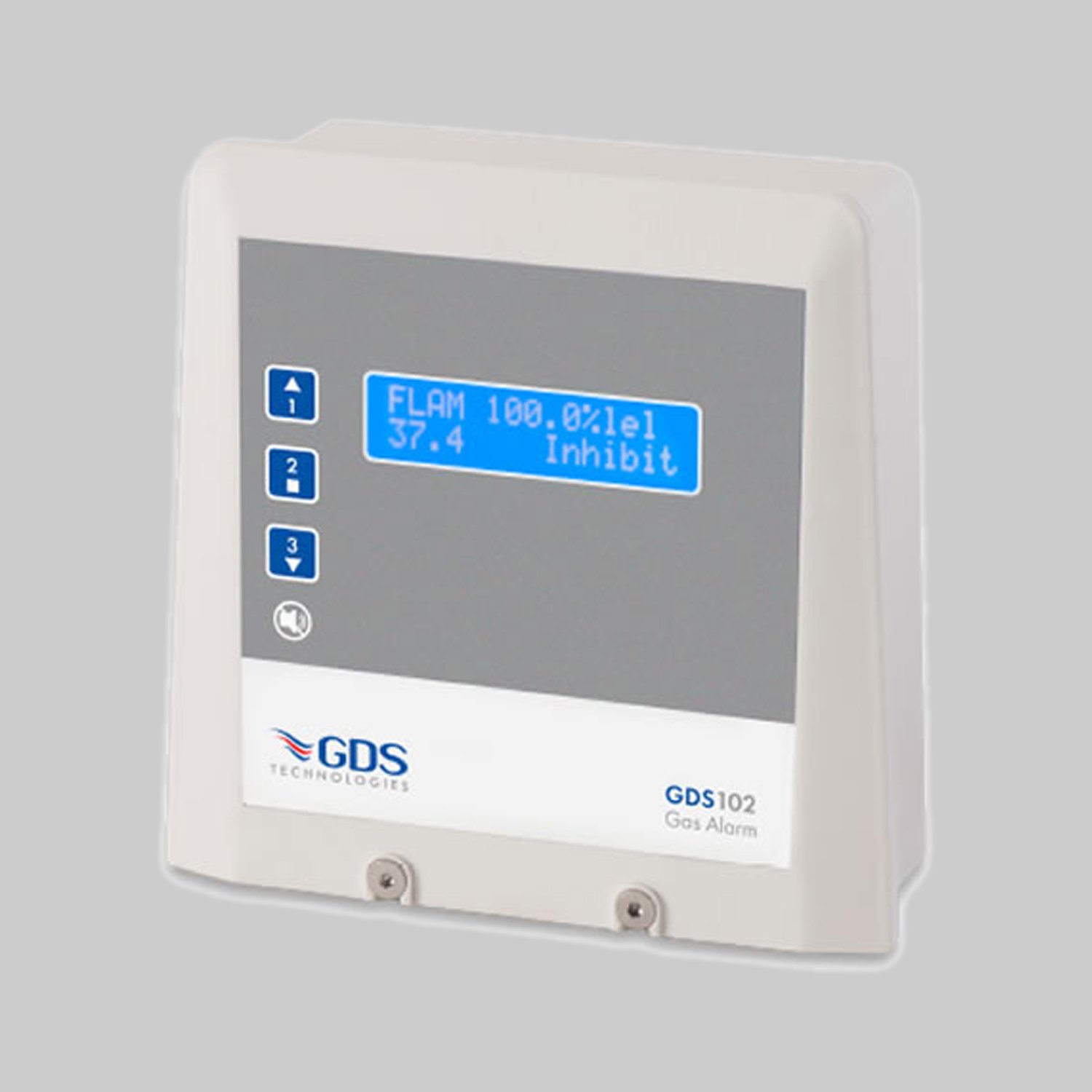
A fixed system watches a known source around the clock. Sensors are mounted near the likely leak points and, because H2S is heavier than air, usually at low level. They connect to a control panel that raises alarms and can start ventilation. On biogas sites, a dedicated unit such as the GDS 308 biogas monitor tracks methane, carbon dioxide, oxygen and H2S together.
A personal monitor is worn in the breathing zone and goes wherever the worker goes. The HSA Code expects the atmosphere in a confined space to be tested before entry where there is any doubt, starting with oxygen, then flammable gas, then toxic gases such as H2S, with continuous monitoring where the risk assessment calls for it. See our confined space gas monitors and portable gas detector range.
Detection supports good practice; it does not replace it. The HSE points out that slurry gases can reach fatal levels very quickly, so ventilation, keeping people out during agitation and a safe system of work still come first.
At low levels hydrogen sulphide smells of rotten eggs. At higher levels it deadens the sense of smell, so the smell can fade while the danger grows. Never use smell to decide whether an area is safe.
Yes. Its relative density is about 1.19, so it tends to collect in pits, sumps, trenches and other low points. Fixed sensors are normally mounted at low level, but air currents and ventilation also affect where gas goes, so placement should be decided on site.
The HSA’s 2026 Code of Practice sets 5 ppm as an 8-hour average and 10 ppm over 15 minutes. Exposure should be kept well below these values, not just under them.
Leave the area and get to fresh air, then call the emergency services if anyone is affected. Do not go back in to help a colleague unless you are trained and equipped under a rescue plan. The HSA warns that would-be rescuers can become casualties themselves.
Follow the manufacturer’s instructions. As an example, BW Technologies by Honeywell recommends a bump test before each day’s use and calibration at least every 180 days for its GasAlertMicroClip range.
We supply, install and calibrate fixed and portable H2S monitors for sewers, wastewater and biogas sites across Ireland. Call 01 289 7720 or email info@vistec.ie.
© 2026 Vistec Gas Detection Ltd
Descriptions