An ATEX gas detector is built to be safe inside a hazardous area, where a flammable atmosphere could form. We supply, install, calibrate and maintain ATEX certified gas detectors, and the panels and valves that go with them, for process plants, pharmaceutical sites, chemical works and fuel installations across Ireland.

A gas detector placed in a hazardous area must not become a source of ignition itself. In the EU, equipment for potentially explosive atmospheres falls under the ATEX equipment directive, 2014/34/EU, which sorts equipment into categories by the level of protection it gives. The zone assigned to an area in your site’s explosion risk assessment decides which category of equipment can be used there.
So the first question is not which detector, but which zone. Our guide to ATEX zones and gas detection explains Zone 0, 1 and 2 and the matching equipment categories. Once the zone and the gas are known, we select a hazardous area gas detector certified for that use and confirm its certificate and marking with you before anything is installed.
For flammable gas in hazardous areas we supply the GDS XDI-F1 Red Line Plus detectors from GDS Technologies. Both are explosion proof transmitters that use non-dispersive infrared sensing, which identifies the target gas by its own absorption signature. The method is non-poisoning, and the transmitter monitors itself and its sensor for faults continuously.
Infrared works well for hydrocarbon gases such as methane and propane, and it is not damaged by the contaminants that can affect other sensor types. It has one limit worth knowing. Honeywell’s technical guide to gas detection notes that this type of detector cannot detect diatomic gas molecules and is therefore unsuitable for hydrogen.
Where hydrogen is the risk, for example around electrolysers or battery charging areas, we specify a different sensor type that does respond to it. Our page on hydrogen gas detectors covers this in more detail. For toxic gases in a hazardous area, the sensor is again chosen for the gas, and the certification still has to match the zone.
Detection is only half the job. When a detector reaches its alarm level, the panel can close a gas solenoid valve on the supply. Our Madas automatic valves for natural gas and LPG are normally closed: they open when the coil is powered and close when the power is removed. Madas lists them as built to EN 161 and in conformity with the ATEX directive.
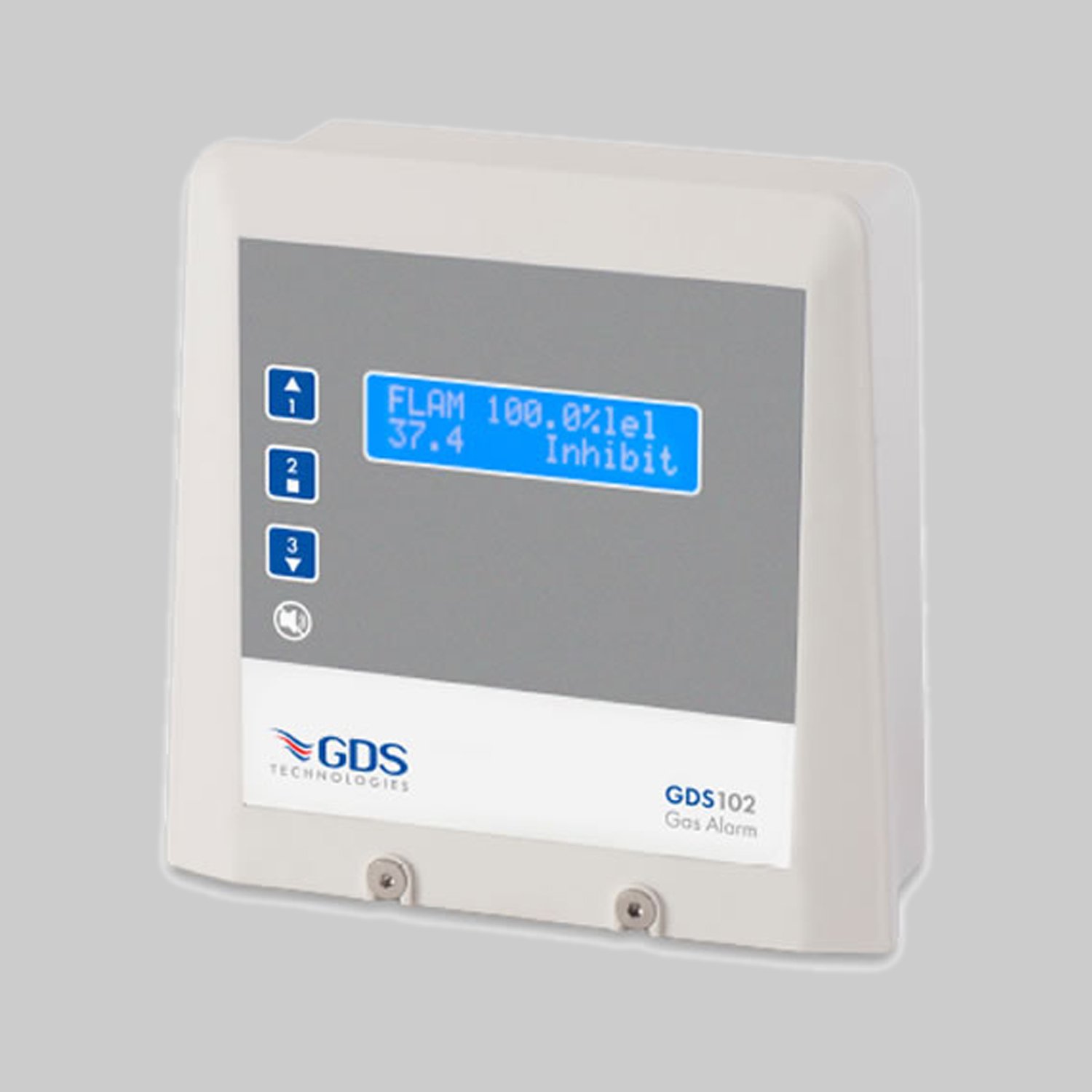
The detectors report to a control panel located outside the hazardous area. The GDS Combi and GDS102 are both designed for sites that may need hazardous area sensing, from a few points to large networked systems. Where fitting a detector head inside the area is impractical, a sampling system such as the GDS 305 draws air from the area to sensors elsewhere.
We supply, install and commission ATEX gas detection systems, and at handover we train your staff on how the system operates and how to reset it after an alarm. On a hazardous site, a detector that has drifted out of calibration is a gap in your protection, so regular calibration with certified test gases matters as much as the original installation.
We offer maintenance contracts, one-off service visits and a rapid response call-out service on a 24-hour basis, with priority response for contract holders. Our engineers also service hazardous area gas detection equipment from many other manufacturers, not only the brands we sell.
Not exactly. Explosion proof, or flameproof, construction is one method of protection. ATEX certification can cover several methods, and the certificate and marking tell you which applies and where the detector can be used. The GDS XDI-F1 models we supply are explosion proof designs.
No. Zone 2 still calls for equipment certified for that zone, although the required equipment category is less demanding than for Zone 0 or Zone 1. Our ATEX zones guide sets out which category goes where.
Area classification is part of your site’s explosion risk assessment, usually carried out by the site or a specialist consultant. We work from your area classification drawings when we design the detection layout, and we can flag points where detection would help.
Yes. Our engineers service and calibrate gas detection equipment from many manufacturers. We check the detectors, test them with certified gas and record the results for your files.
Yes. We are based in Blackrock, Co. Dublin, and cover sites nationwide, from pharmaceutical and chemical plants to fuel and process sites.
Send us your zone drawings and the gases on site, and we will recommend ATEX certified detection to suit. Call 01 289 7720 or email info@vistec.ie.
© 2026 Vistec Gas Detection Ltd
Descriptions