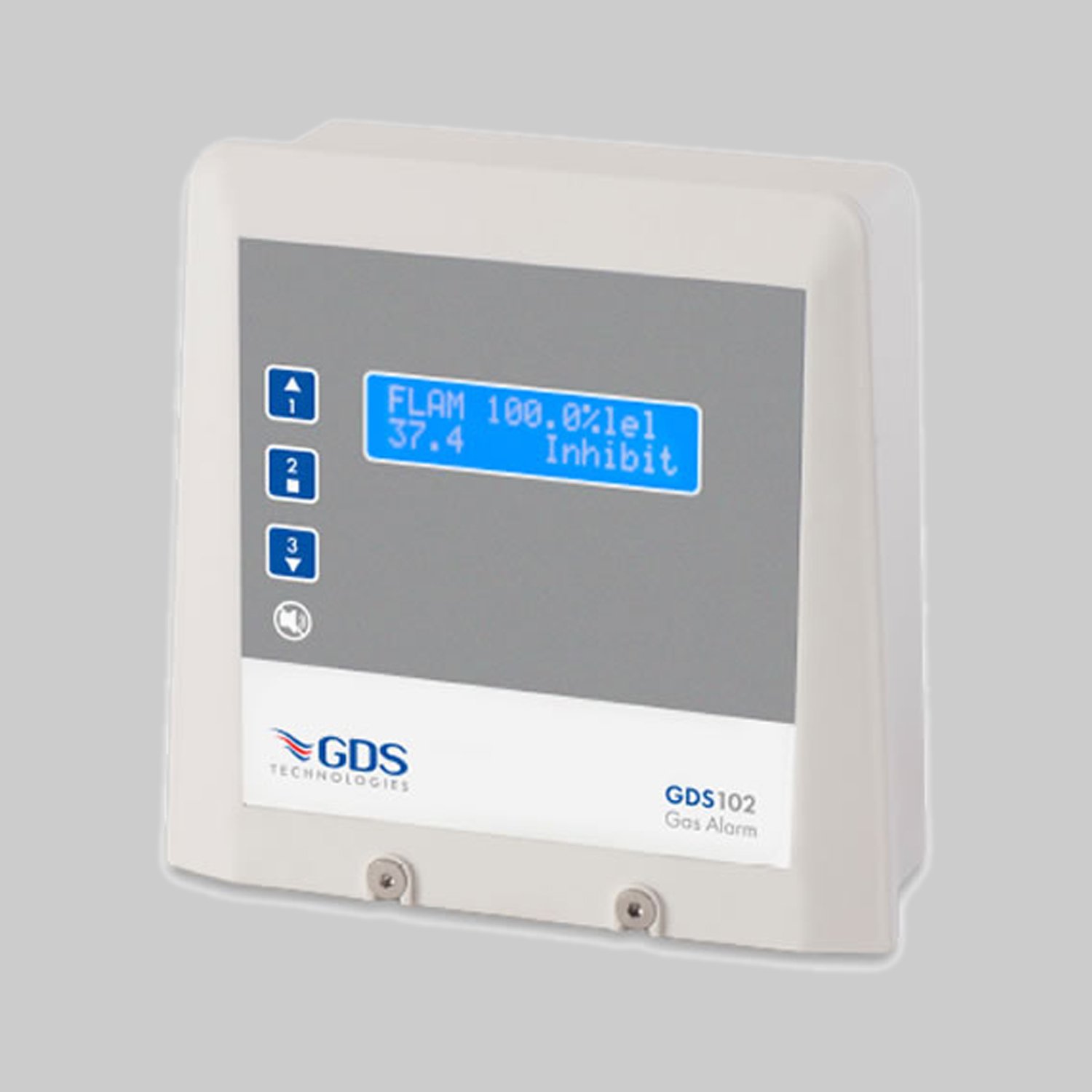
A hydrogen detector gives early warning of a flammable build-up in battery rooms, UPS rooms, laboratories and around electrolysers. We supply, install, calibrate and maintain fixed hydrogen gas detection for sites across Ireland, linked to alarms, ventilation and gas shut-off where needed.

The International Chemical Safety Card for hydrogen describes it as an odourless, colourless gas, so nobody will smell or see a leak. It is also flammable across a very wide range: the same card gives explosive limits of 4 to 75% by volume in air. The lower figure, 4%, is the one a flammable gas detector works against. Alarms are set at a fraction of it, so they act long before a flammable mixture can form. Our guide What is LEL? explains how %LEL readings and alarm levels work.
Hydrogen is also very light. The safety card gives it a relative vapour density of 0.07, with air as 1, and states that the gas is lighter than air. A leak rises quickly and gathers at ceiling level, in roof voids and in any high pocket the ventilation does not reach.
Batteries give off hydrogen while they charge. The UK Health and Safety Executive’s guidance on using electric storage batteries safely says hydrogen and oxygen are usually produced inside a battery when it is being charged, that they are produced more quickly as the battery gets close to full charge, and that a violent explosion is likely if the gases ignite in a confined space such as a poorly ventilated battery room.
The same guidance says valve-regulated, or maintenance-free, batteries are much less likely to release hydrogen than vented batteries, but that care is still needed. If they are charged too quickly or for too long, gas pressure can build up inside. A fixed hydrogen detector at high level in a battery or UPS room watches for a build-up and can raise the alarm, start extract fans or send a signal to your BMS.
Laboratories use hydrogen from cylinders, generators and piped supplies. We place detectors at high level near cylinder stores, manifolds and the instruments that use the gas, and link them to an alarm and a gas solenoid valve so the supply closes on a high alarm. Our laboratory gas detection page covers the other gases a lab system usually monitors, such as oxygen depletion.
Electrolysers and hydrogen process areas may be classified as hazardous areas. There, the detectors and any other equipment in the zone must be certified for it. See our page on ATEX gas detectors for how we approach hazardous area detection.
Not every flammable gas sensor responds to hydrogen. Honeywell’s technical guide to gas detection notes that infrared detectors cannot detect diatomic gas molecules and are unsuitable for hydrogen. We specify a sensor type that does respond to hydrogen, set up and calibrated for that gas, and connect it to a panel that suits the size of the site.
We survey the room, confirm sensor positions and any ventilation or shut-off links, then install, commission and hand over with training on how the system operates and how to reset it after an alarm.
Hydrogen sensors need regular calibration with certified test gases to stay accurate. Our customer database flags a month in advance when a service is due, so the visit is booked at a time that suits you. We also offer one-off service visits and a rapid response call-out service on a 24-hour basis, with priority response for maintenance contract holders.
High, because hydrogen is lighter than air. Detectors go close to the ceiling above the likely source, and in any roof void or high pocket where gas could gather. We confirm the exact positions on site, taking the ventilation into account.
Not reliably. A sensor calibrated for methane will not read hydrogen accurately, and infrared methane sensors do not respond to hydrogen at all. Use a detector set up and calibrated for hydrogen.
HSE guidance says valve-regulated batteries are much less likely to release hydrogen than vented batteries, not that they never do. Whether you need detection depends on your risk assessment, the size of the installation and the ventilation. We can help you assess the room.
Depending on how it is set up, the system raises an alarm and can start extract ventilation or close a gas valve. People should follow the site emergency procedure, avoid any source of ignition, get to fresh air and call the emergency services if needed.
Yes. Our engineers service and calibrate gas detection equipment from many manufacturers, not only the brands we sell.
Tell us where hydrogen is stored, used or produced on your site and we will recommend detection to suit. Call 01 289 7720 or email info@vistec.ie.
© 2026 Vistec Gas Detection Ltd
Descriptions