An H2S monitor is a small personal detector that alarms when hydrogen sulphide around the wearer reaches a set level. We supply two single gas H2S monitors, the Honeywell BW Solo and the Crowcon Gasman, with the bump test gas and calibration to keep them reliable.
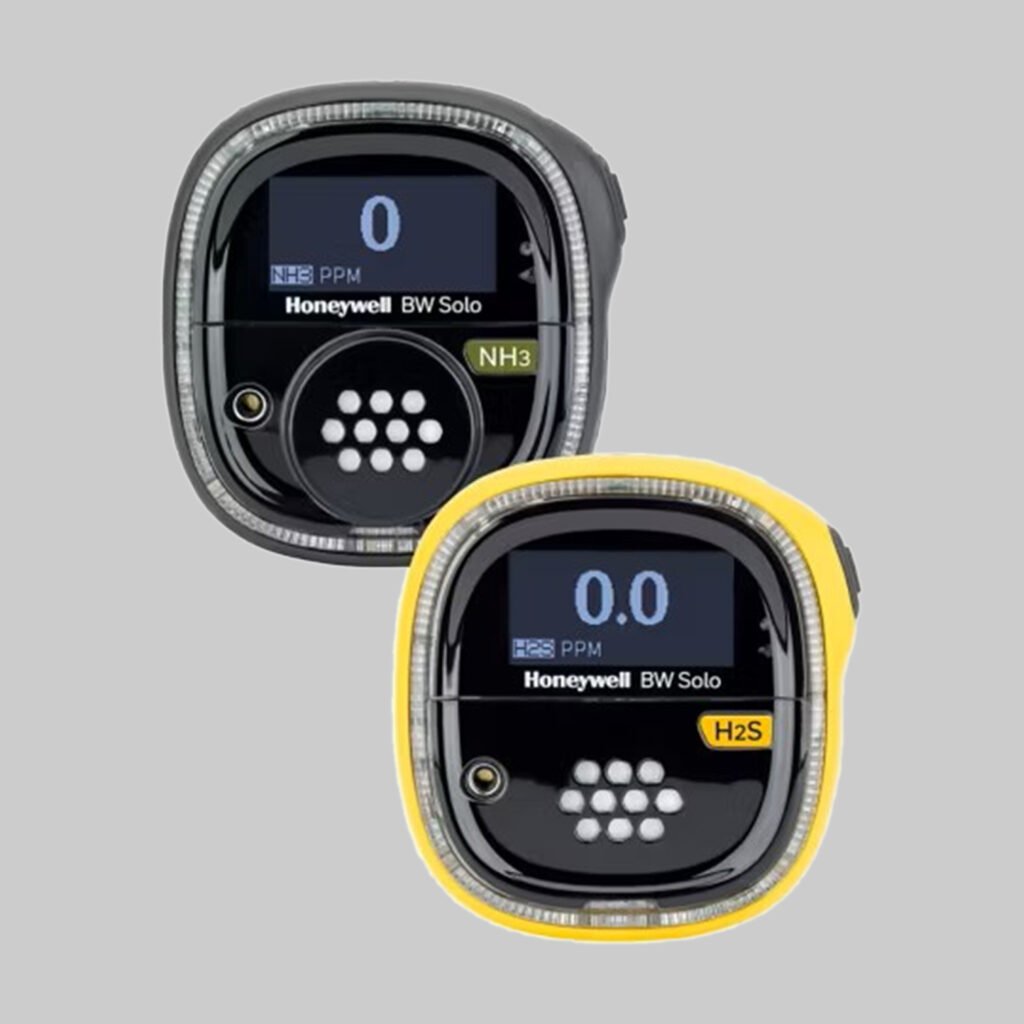
| BW Solo H2S range | 0 to 200 ppm, 0.1 ppm resolution (1-Series sensor). Extended range 0 to 500 ppm (4-Series sensor) |
|---|---|
| BW Solo battery | Typical battery life 12 months (H2S) |
| BW Solo ingress protection | IP66/68 |
| BW Solo approvals | ATEX II 1G Ex ia IIC T4 Ga. IECEx Ex ia IIC T4 Ga. -40°C to +60°C |
| BW Solo weight and docking | 103 to 116 g. Compatible with Honeywell IntelliDoX for automated bump testing and calibration |
| Gasman H2S range | 0 to 250 ppm, typical alarm 5 ppm |
| Gasman battery | Non-rechargeable lithium, up to 2 years, or rechargeable lithium |
| Gasman ingress protection | IP65 |
| Gasman approvals | ATEX II 1G Ex ia IIC T4 Ga. IECEx Ex ia IIC T4 Ga (toxic versions). -20°C to +65°C |
| Gasman weight | 85 g (toxic versions) |
Hydrogen sulphide is a toxic gas. A personal H2S monitor clips to the collar or chest and measures the air the wearer is breathing. It gives a loud, bright and vibrating alarm when the reading passes a set point, so the wearer can leave the area. Our guide on what H2S gas is explains where it comes from and why it is dangerous.
The HSA’s 2026 Code of Practice for the Chemical Agents Regulations sets an occupational exposure limit value for hydrogen sulphide of 5 ppm over 8 hours and 10 ppm over 15 minutes. On the BW Solo, users can change the High, Low, TWA and STEL alarm set points. The Gasman H2S version has a typical alarm level of 5 ppm, with TWA alarms on toxic versions.
The BW Solo is Honeywell’s serviceable single gas detector. Sensors, batteries and sensor filters can be replaced without taking the unit apart. The H2S version uses Honeywell’s 1-Series sensor, with a range of 0 to 200 ppm and 0.1 ppm resolution, and a typical battery life of 12 months. An extended range 0 to 500 ppm H2S sensor is also available.
It is rated IP66/68, is approved ATEX and IECEx Ex ia IIC T4 Ga, and works from -40°C to +60°C. Honeywell describes it for hazardous-area workers. The BW Solo docks in Honeywell’s IntelliDoX for automated bump testing and calibration, and a wireless version can send readings to Honeywell’s Safety Suite software through a phone app.
The Gasman is Crowcon’s rugged single gas monitor. The H2S version measures 0 to 250 ppm, weighs 85 g and is rated IP65. Toxic versions come with either a rechargeable lithium battery or a non-rechargeable lithium battery that Crowcon rates for up to 2 years. Crowcon names oil and gas, chemical, steel works, and waste and water works as typical industries. The Crowcon Gasman page covers the other gas versions.
A single gas H2S monitor suits work where hydrogen sulphide is the one known hazard. For entry into a tank, chamber or sewer, the hazards can include low oxygen, flammable gas and carbon monoxide as well, so a 4 gas monitor such as the Crowcon T4 or GasAlertMicroClip XL is the usual choice.
Whichever you choose, we supply H2S bump test gas and regulators, and provide gas detector calibration with a certificate for each monitor.
The HSA’s 2026 Code of Practice for the Chemical Agents Regulations sets an occupational exposure limit value for hydrogen sulphide of 5 ppm over 8 hours and 10 ppm over 15 minutes.
Honeywell quotes a typical battery life of 12 months for the BW Solo H2S version. Crowcon rates the non-rechargeable Gasman toxic versions for up to 2 years. Frequent alarms shorten battery life.
Follow the manufacturer’s instructions and your own risk assessment. Many users bump test before each day’s use. A monitor that fails a bump test should be taken out of service until it is calibrated or repaired.
Leave the area at once and follow your site’s emergency arrangements. Anyone feeling unwell should get to fresh air, and call the emergency services.
Tell us where your team works and how many monitors you need, and we will recommend an H2S monitor and supply the test gas to match. Call 01 289 7720 or email info@vistec.ie.
© 2026 Vistec Gas Detection Ltd
Descriptions