Guide by Vistec Gas Detection. Last updated November 2026.
The legal limits for carbon monoxide exposure at work in Ireland are 20 ppm averaged over 8 hours and 100 ppm over 15 minutes, set in the HSA’s Code of Practice for the Chemical Agents Regulations. Carbon monoxide has no colour, smell or taste, and its early symptoms are easily mistaken for flu or tiredness, so the only reliable way to know the level in a workplace is to measure it. This guide covers where CO comes from at work, who is at risk, what exposure does to the body and how carbon monoxide monitors are used to protect people.
Carbon monoxide (CO) is a poisonous gas produced when any carbon based fuel burns without enough oxygen. The Health and Safety Authority (HSA) lists coal, petrol, diesel, LPG, natural gas and wood among those fuels. It is colourless, odourless, tasteless and non-irritating, and the HSA notes it is often called a silent killer for that reason. It is also extremely flammable.
Once breathed in, carbon monoxide passes quickly from the lungs into the blood, where it binds to haemoglobin to form carboxyhaemoglobin. That reduces the blood’s ability to carry oxygen, starving the heart, brain and other organs.
Occupational exposure limit values (OELVs) for carbon monoxide are set in the HSA’s Code of Practice for the Chemical Agents Regulations. An OELV is the maximum concentration a worker may be exposed to, measured over a set reference period.
| Reference period | Limit (ppm) | What it means |
|---|---|---|
| 8 hours | 20 ppm | Average exposure over a working day must not exceed this |
| 15 minutes | 100 ppm | Short term limit: no 15 minute period may average above this |
The HSA reports that five work related deaths were attributed to carbon monoxide exposure over a seven year period. The risk comes from fuel burning equipment in places where the exhaust cannot clear: generators, heaters, furnaces, vehicles and engine driven tools used in poorly ventilated areas, appliances with blocked or damaged flues, and vehicle cabs with faulty exhausts. Concrete saws, power floats, floor grinders, compressors and diesel forklift trucks used indoors are named examples.
Occupations the HSA lists as at risk include:
The HSA describes the signs of exposure as copying many common illnesses, easily confused with flu or simple tiredness. At low levels, carbon monoxide may cause poor concentration, memory and vision problems and loss of muscle coordination. At higher levels it may cause headaches, fatigue, vomiting and nausea. At very high levels the symptoms intensify and it can kill within a matter of hours.
Long term exposure to low levels may produce heart disease and damage to the nervous system, and carbon monoxide is classed as a category 1 reproductive toxin, so pregnant employees must be specifically considered in the risk assessment. Poisoning can be reversed if it is caught in time, which is why an early warning matters.
Among its prevention measures, the HSA advises employers to install carbon monoxide monitors with audible alarms, or provide personal carbon monoxide monitors, where there is a risk of exposure. It stresses that monitors are a backup to safe systems of work, good ventilation and well maintained equipment, not a replacement for them.
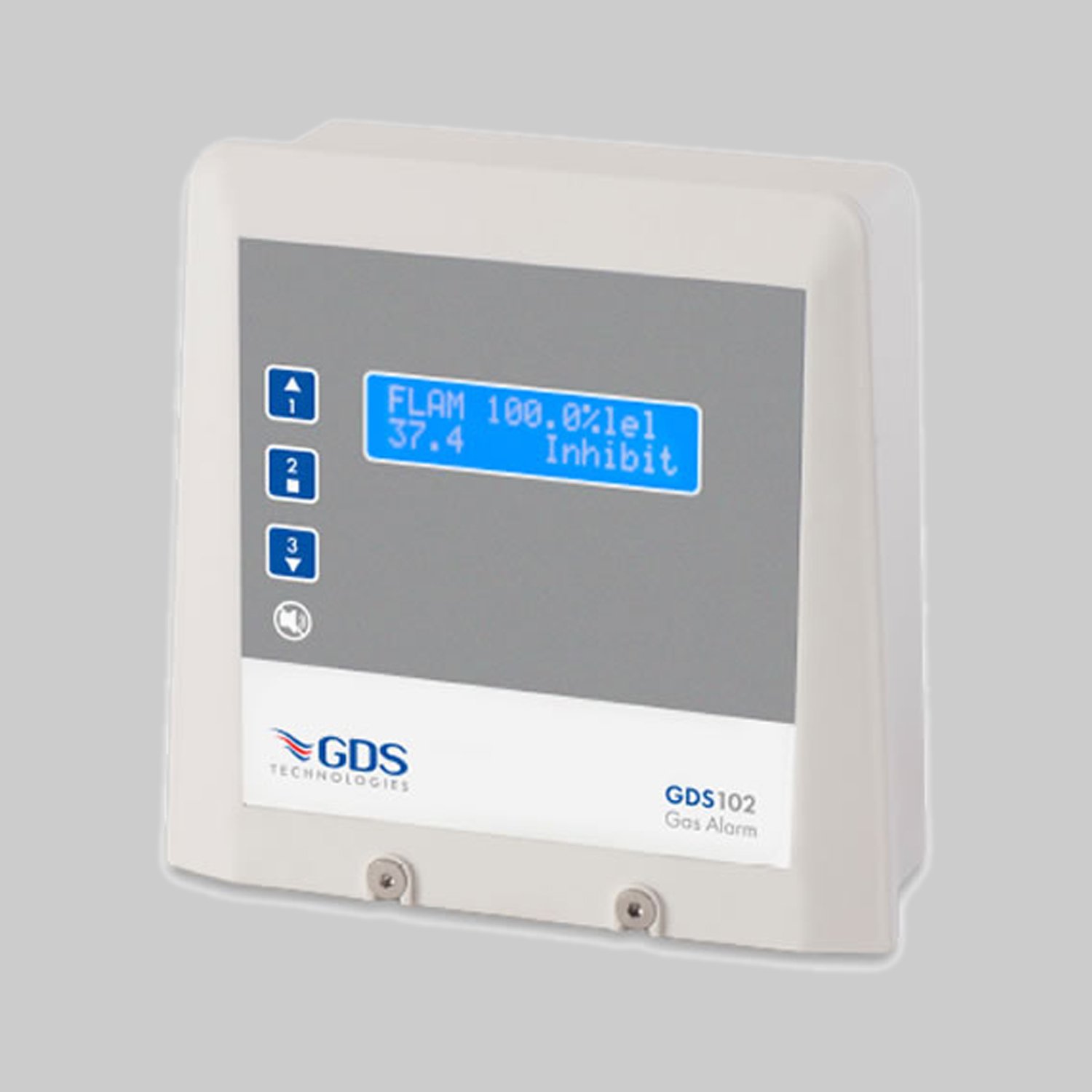
A fixed CO detection system suits a room or space where the hazard is always present: a boiler room, an enclosed car park, a loading bay or a plant room. Sensors report to a control panel that sounds alarms and can start ventilation or shut off the gas supply through a gas solenoid valve. In car parks, CO detection is what drives the extract fans; our guide to nitrogen dioxide in car parks covers the second gas those systems measure.
A personal CO monitor suits people who move around: engineers, mechanics, people entering confined spaces. Most 4-gas monitors measure carbon monoxide alongside oxygen, flammable gas and hydrogen sulphide.
Carbon monoxide is very slightly lighter than air and mixes readily with it, so fixed CO sensors are usually mounted at breathing height, near the likely source and where people work. In a car park the layout of ramps, bays and fans decides the spacing. In a boiler room the sensors go near the appliances and flues. We survey the space before recommending positions.
Like all gas sensors, CO sensors drift and must be calibrated with certified test gas. Our guide on how often gas detectors should be calibrated explains the intervals, and we calibrate fixed and portable CO monitors on site.
The occupational exposure limit values are 20 ppm averaged over 8 hours and 100 ppm over any 15 minute period, set in the HSA’s Code of Practice for the Chemical Agents Regulations. Employers must keep exposure below these limits.
At low levels, the HSA lists poor concentration, memory and vision problems and loss of coordination. At higher levels, headaches, fatigue, nausea and vomiting. The symptoms are easily mistaken for flu or tiredness.
Where the risk assessment finds a risk of exposure, the HSA advises installing carbon monoxide monitors with audible alarms or providing personal CO monitors, as a backup to good ventilation and maintenance.
A domestic alarm is designed to warn a household. A workplace system is designed around the exposure limits, gives readings over time, can drive ventilation or close a gas valve, and is calibrated and serviced on a schedule. For a plant room, kitchen or car park, a fixed CO detection system is the right tool.
Usually at breathing height, close to the likely source and where people work. The exact position depends on the space, which is why a survey comes first.
We survey the space, recommend fixed or personal CO monitoring and install, calibrate and service it. Call 01 289 7720 or email info@vistec.ie.
© 2026 Vistec Gas Detection Ltd
Descriptions